

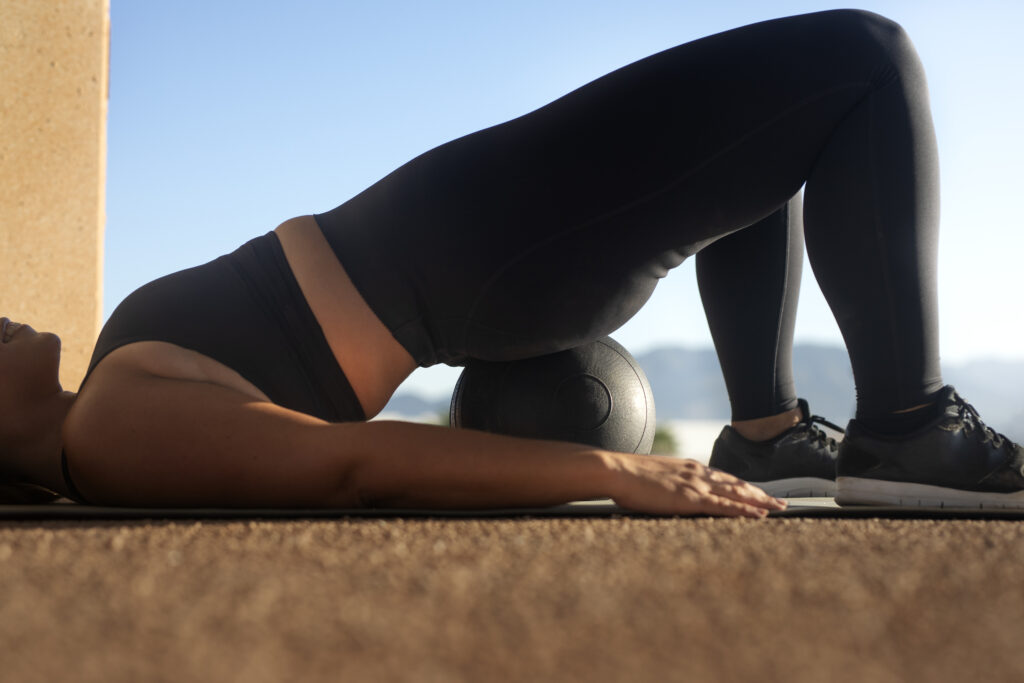
If your hips always feel tight — no matter how much you stretch — you’re not alone.
At RX Rehab & Performance in Pacific Beach, we hear this almost every day:
“I stretch all the time, but my hips still feel locked up.”
Here’s the catch: tight hips aren’t always too tight. Sometimes, they’re too unstable.
Understanding the difference between mobility and stability is what helps you finally move — and feel — better.
1. Mobility vs Stability — What’s the Difference?
Mobility is your ability to move through a range of motion.
Stability is your ability to control that range.
Think of mobility as your car’s steering — and stability as the brakes.
Without enough mobility, you feel stiff. Without enough stability, you feel weak, wobbly, or constantly tense.
The goal isn’t to pick one — it’s to balance both.
2. Why “Tight Hips” Don’t Always Need More Stretching
Many people assume tightness means a lack of flexibility. But in many cases, the body tightens muscles on purpose to create stability when control is missing.
If you’ve been stretching your hip flexors and glutes for months with little improvement, it might not be a flexibility issue — it’s a control issue.
Your body may be using tension as protection.
3. Common Causes of Hip Imbalance
- Weak glutes or deep hip stabilizers (the rotators that guide hip movement).
- Core instability, forcing the hips to overwork for balance.
- Repetitive sitting or single-pattern movement (cycling, running, long commutes).
- Old injuries that changed how the hip moves or loads.
When one area underperforms, another compensates — and that’s where pain or tightness builds up.
4. How to Build Mobility and Stability Together
Here’s the key: you don’t gain long-term mobility without control.
These foundational movements help build both sides of the equation (best performed under professional guidance if you’re dealing with pain):
90/90 Hip Rotations:
Train internal and external rotation control — builds usable range of motion.
Glute Bridge with March:
Combines hip extension with core stability — teaches your hips to move independently of the spine.
Hip Airplanes:
Dynamic single-leg movement that strengthens stabilizers through motion.
Copenhagen Planks:
Targets inner thigh and hip control often neglected in traditional lifting.
Each one blends movement freedom with muscular coordination — helping the hips move smoothly without over-tightening.
5. Why Balance Matters for Athletes and Active Adults
Whether you lift, run, surf, or just stay active, the hips are your powerhouse.
Too much flexibility without stability can feel loose and lead to irritation.
Too much stability without mobility limits performance and movement freedom.
The strongest, most resilient hips don’t rely on stretching alone — they rely on training that challenges both control andrange.
6. How We Approach Hip Function at RX Rehab & Performance
Our approach is simple: find what’s missing, retrain how the hips move, and rebuild strength through balance.
For patients across Pacific Beach, La Jolla, and Bird Rock, that means:
- Manual therapy to reduce protective tension.
- Movement retraining to restore joint mechanics.
- Strength programming for both stabilizers and movers.
- Education on daily habits and warm-ups to maintain results.
Our goal isn’t just looser hips — it’s stronger, more capable movement that holds up over time.
7. Long-Term Hip Health Tips
- Mix stretching and strengthening in every session.
- Train single-leg stability regularly (lunges, step-ups, airplanes).
- Warm up dynamically — avoid static holds before lifting or running.
- Move often throughout the day — sitting still is the real enemy of hip health.
Consistency beats intensity every time. Small, daily habits keep the hips strong, mobile, and pain-free.
FAQ
Q1: How do I know if I need more hip mobility or stability?
If stretching doesn’t help tightness, you likely need more control, not more range.
Q2: Can you have too much mobility?
Yes — without stability, extra motion can cause strain or joint irritation.
Q3: What are the best exercises for hip stability?
Single-leg strength work like bridges, step-ups, and hip airplanes help build control.
Q4: Should I stretch my hips every day?
Gentle mobility work is great, but balance it with strengthening for lasting results.
Q5: Can physical therapy help with hip tightness?
Yes. Movement-based rehab can identify whether you need more flexibility, control, or both.
Conclusion
True hip health isn’t about stretching more — it’s about teaching your body to move better.
When you combine mobility and stability, your hips stop feeling locked up and start feeling powerful.At RX Rehab & Performance, we help athletes and active adults around Pacific Beach and La Jolla find that balance — so they can move freely, perform better, and stay pain-free long term.
