

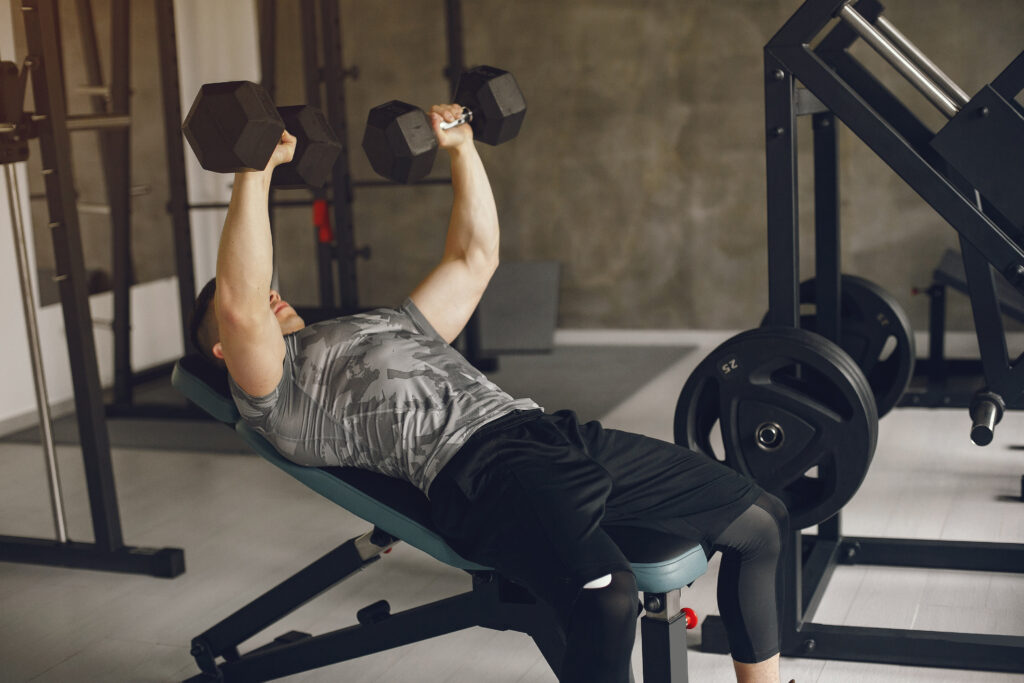
You load up the bar, press overhead — and suddenly feel a pinch or strain in your shoulder. You back off, test again, and the same thing happens.
Overhead pressing is one of the most valuable movements for upper-body strength — but it’s also one of the easiest to perform with poor shoulder mechanics.
At RX Rehab & Performance in Pacific Beach, we see this pattern often. The goal isn’t to stop pressing — it’s to understand why your shoulder hurts and how to adjust your technique, mobility, and load so you can train safely and confidently again.
1. Why Shoulder Pain Happens During Pressing
The shoulder is designed for mobility, but pressing requires both strength and control.
When certain areas move too much — or not enough — the small stabilizers end up working overtime.
Common contributing factors include:
- Limited shoulder or upper-back mobility that forces compensation.
- Weak rotator cuff or scapular control during the lift.
- Pressing volume that outpaces shoulder recovery.
- Lack of overhead preparation in warm-ups.
These don’t mean you’ve injured something — they’re simply signs that your body needs better coordination before more load.
2. The Shoulder’s Overhead “Teamwork”
A good press isn’t just about the shoulder joint — it’s the combination of your shoulder blade, spine, and rib cage moving together.
If your upper back is stiff, your shoulders have to work harder to reach overhead.
If your scapula doesn’t rotate properly, your rotator cuff can’t stabilize well.
That’s why the best shoulder programs train movement patterns, not just muscles.
3. How to Modify the Shoulder Press Without Losing Strength
Pain with overhead pressing doesn’t mean you have to stop training. Often, small changes in angle, load, or grip make a big difference.
✅
Try These Adjustments:
- Switch to a Neutral Grip: Dumbbells or a Swiss bar reduce joint stress.
- Limit the Range: Press to just below the painful arc, then build upward over time.
- Seated or Half-Kneeling Press: Improves trunk control and shoulder position.
- Tempo Work: Slowing down the lift improves awareness and control.
The goal is to maintain strength through modified movement — not force through pain.
4. Mobility Prep That Supports Overhead Pressing
Before loading up the bar, prepare your shoulder and upper back to move freely.
Foam Roller Extensions: Open up the thoracic spine.
Wall Slides: Reconnect shoulder blade motion with overhead reach.
Band External Rotations: Activate rotator cuff and stabilizers.
Scap Push-Ups: Teach shoulder blades to move fluidly along the rib cage.
These drills help the entire kinetic chain work together, reducing stress on the smaller shoulder tissues.
5. Strength and Stability Work That Supports Pain-Free Pressing
Once mobility improves, focus on controlled strengthening.
Landmine Press: Great bridge between horizontal and vertical pressing.
Bottoms-Up Kettlebell Press: Builds shoulder and grip stability under dynamic challenge.
Face Pulls: Reinforce scapular balance after pressing sessions.
Farmer’s Carries: Train global stability from shoulder to core.
These exercises don’t “fix” pain, but they help create the foundation for sustainable overhead strength.
6. What to Avoid Early On
- Overhead pressing through pain or pinching.
- Excessive behind-the-neck presses (high joint stress).
- Relying solely on stretching — it helps mobility, not control.
Focus instead on gentle load management, quality reps, and consistent practice.
7. How We Approach Shoulder Press Pain at RX Rehab & Performance
Our process starts with finding what your shoulder is really reacting to — mobility, stability, or load.
We use a combination of:
- Movement analysis to pinpoint weak links in your press pattern.
- Manual therapy for soft-tissue or joint restrictions.
- Progressive loading programs to rebuild overhead strength safely.
- Education on training balance and volume control.
Patients around Pacific Beach, La Jolla, and Bird Rock often notice improved comfort and range once their press mechanics are dialed in — even before adding heavy weight back.
8. Long-Term Shoulder Health Tips
- Always warm up with activation, not just stretching.
- Balance every pressing session with pulling work.
- Keep volume increases gradual — the shoulder thrives on consistency.
- Don’t ignore fatigue or early warning signs — it’s easier to adjust early than rehab later.
Healthy shoulders don’t come from avoiding load — they come from managing it well.
FAQ
Q1: Why does my shoulder hurt when I press overhead?
Often from limited mobility or control in the shoulder and upper back, not structural damage.
Q2: Should I stop overhead pressing if it hurts?
Not necessarily — modify the angle or load and focus on pain-free movement.
Q3: What’s the best alternative to shoulder presses?
Landmine or neutral-grip dumbbell presses often feel better during recovery phases.
Q4: How long does shoulder press pain take to improve?
Many people notice improvement within a few weeks with proper technique and load management.
Q5: Can physical therapy or chiropractic care help?
Yes. A combination of manual therapy and progressive movement training often helps restore safe overhead motion.
Conclusion
Overhead pressing is a skill as much as a strength movement.
By improving mobility, technique, and control, you can continue building powerful shoulders without pain or setbacks.
At RX Rehab & Performance, we help athletes and active adults around Pacific Beach and La Jolla press smarter, move stronger, and build lasting confidence in their overhead strength.
