


When Kourtney walked into our clinic, she was on crutches.
She was in her late 30s. A former collegiate athlete who had spent most of her adult life staying active, competing, and pushing her body. And she had already been through multiple rounds of physical therapy for her knee — none of which had stuck.
But what struck me most wasn’t the crutches.
It was something she said about five minutes into our conversation.
She told me she had started planning her routes home from work around her knee. There were streets she avoided — not because they were dangerous, but because she knew the distance and the pavement and the incline would leave her in too much pain by the time she got home. She had become an expert at quietly managing around her own body.
She told me, matter-of-factly, that she didn’t really believe she’d ever be athletic again.
Not with anger. Not with tears. Just the quiet, settled tone of someone who had already made peace with a smaller life.
That moment stayed with me.
Why Previous Treatment Hadn’t Worked
Kourtney’s story is more common than most people realize.
She hadn’t had bad physical therapists. She hadn’t ignored her care plan. She had done everything right — and she had gotten some relief each time. But relief and recovery are two different things. And the gap between them is exactly where Kourtney had been living for years.
Most traditional rehabilitation is designed to reduce pain and restore basic function. Those are worthy goals. But for an active adult — someone who doesn’t just want to walk without pain, but wants to run, train, compete, and move without thinking about it — basic function is not the finish line.
It’s the starting line.
What Kourtney had never been given was a bridge. A progressive plan that took her from “symptoms resolved” all the way to “back to the athlete I know I am.” Every time she’d gotten close, she’d either been discharged or left to figure out the rest on her own.
And so the cycle continued. Relief. Attempt to return. Setback. Back to PT. Relief again.
What We Did Differently From Day One
Before we touched Kourtney’s knee — before a single assessment, before any hands-on treatment — we sat down and asked her questions.
Not about her pain. About her life.
What did she want to get back to? Not just “less pain” — specifically. What did her life look like when her body wasn’t the obstacle? What would she do the first morning she woke up and her knee wasn’t the first thing she thought about? What did getting back to 100% actually mean to her?
She thought it was a little strange at first. She came in for her knee. Why were we asking about her Saturday mornings and the hikes she used to take and the routes home she’d stopped walking?
Because the answers to those questions don’t just tell us where someone wants to go. They tell us exactly what success looks like — and they become the compass for every decision we make throughout the program.
This is one of the things that separates outcome-based rehabilitation from symptom-based treatment. When you build a plan around a patient’s actual goals, every exercise, every progression, every week of programming has a purpose that connects directly back to the life they’re trying to reclaim.
Kourtney’s goals became our goals. And that changed everything about how we approached her care.
The 15-Week Program
We built Kourtney a 15-week program from the ground up — designed not just to resolve her knee symptoms, but to rebuild her body’s confidence from the inside out.
The early weeks focused on identifying and correcting the compensation patterns that had developed around her injury. When the body protects a painful area for long enough, it starts recruiting other muscles and joints to pick up the load. Those patterns become ingrained. They feel normal. And they quietly put the rest of the body at higher risk while keeping the injured area weak and underloaded.
We addressed those patterns first — because loading a movement you’re compensating in doesn’t fix the problem. It reinforces it.
From there, we progressed systematically. Each week was intentional. Each new load, each new movement, each new demand on her knee was carefully chosen to give her nervous system new evidence: this is safe. You can trust this. You can do this.
That’s not a metaphor. That’s how the neuroscience of pain and recovery actually works. The brain needs proof — through reps, through experience, through progressive exposure — before it updates its threat assessment and allows full, confident movement again.
Week by week, Kourtney got that proof.
Where She Ended Up
By the end of 15 weeks, Kourtney was a different athlete.
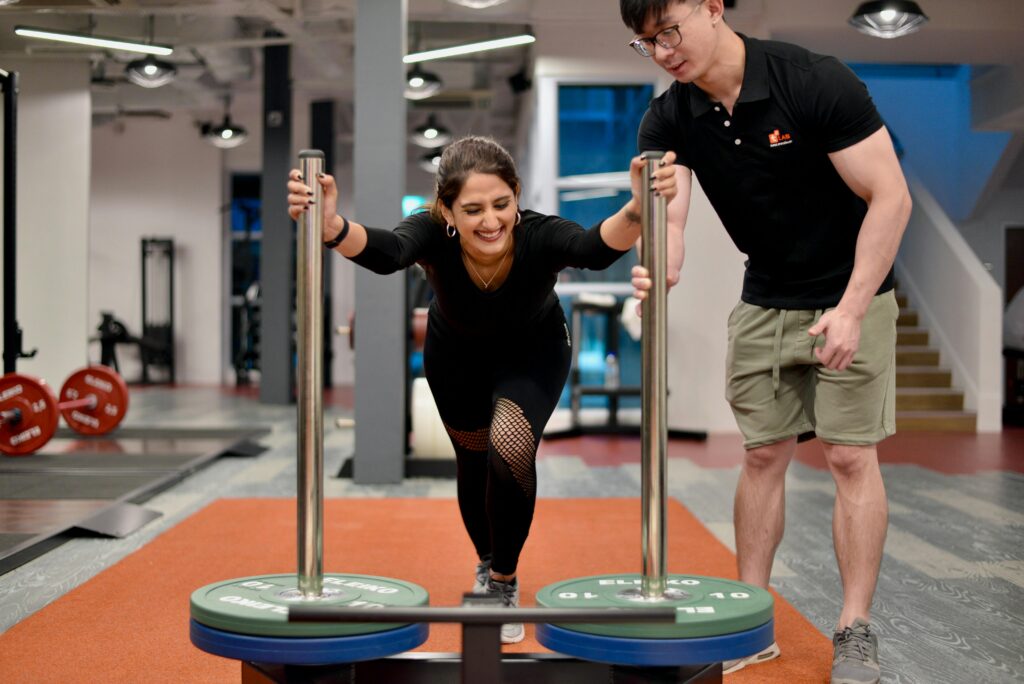
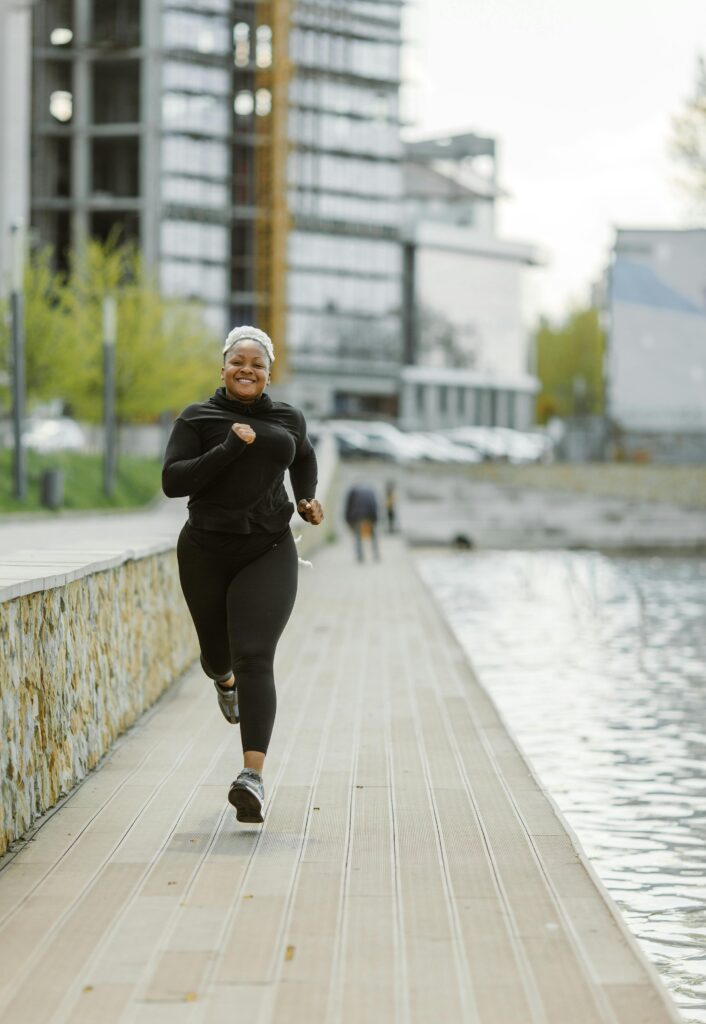
She was running several miles at a time. She was pushing over 300 pounds on the sled. She was jumping — explosively, confidently — the way she used to in college.
The crutches were long gone. But more importantly, so was the quiet resignation that had settled into her voice when she first walked through our door.
There’s a moment near the end of her program that I think about often.
Kourtney brought up the questions we had asked her in that very first session. The ones she thought were a little odd — the ones about her goals and her life and what she actually wanted back.
She said she wanted to thank me for them.
Because looking back, she realized that’s exactly why this time was different. We didn’t chase her symptoms. We built her plan around where she genuinely wanted to go. And because we knew that from the very first conversation, we were able to get her there — specifically, completely, and confidently.
She told me she walks every route home now.
No detours. No mental calculations. No quiet adjustments made to accommodate a body she no longer trusted.
Just her life — fully lived.
What Kourtney’s Story Means for You
Kourtney’s outcome wasn’t luck. It wasn’t extraordinary willpower. And it wasn’t a miracle treatment.
It was the result of a process that started with the right questions, was built around the right goals, and progressed with the right plan.
If you’ve been through treatment before and felt like something was missing — if you got relief but never got all the way back — there’s a good chance it’s not you. It’s the gap. The space between symptom resolution and true return to performance that most rehabilitation programs simply aren’t designed to close.
That gap is exactly what we built Rx Rehab and Performance to address.
We work exclusively with active adults who aren’t satisfied with managing their limitations. People who want to know what’s actually going on in their body, why it keeps happening, and what a real plan back to full performance looks like.
Not someday. Now.
Ready to Find Out What’s Possible?
The first step is a conversation.
We offer a complimentary Discovery Call with Dr. Albert personally — a free 15-minute call where we learn about your situation, your history, and what you actually want to get back to.
If it’s a great fit, we’ll bring you in for a complimentary 30-minute Discovery Visit where we do a real movement screen and start identifying the root cause — not just the symptom.
Kourtney walked in on crutches. Fifteen weeks later she was pushing 300 pounds on a sled.
Your story doesn’t have to end where it is right now.
Dr. Albert is the Owner and Head Physician at Rx Rehab and Performance, a rehab and performance clinic serving active adults. Rx Rehab and Performance specializes in bridging the gap between injury recovery and return to full performance.
