

Introduction
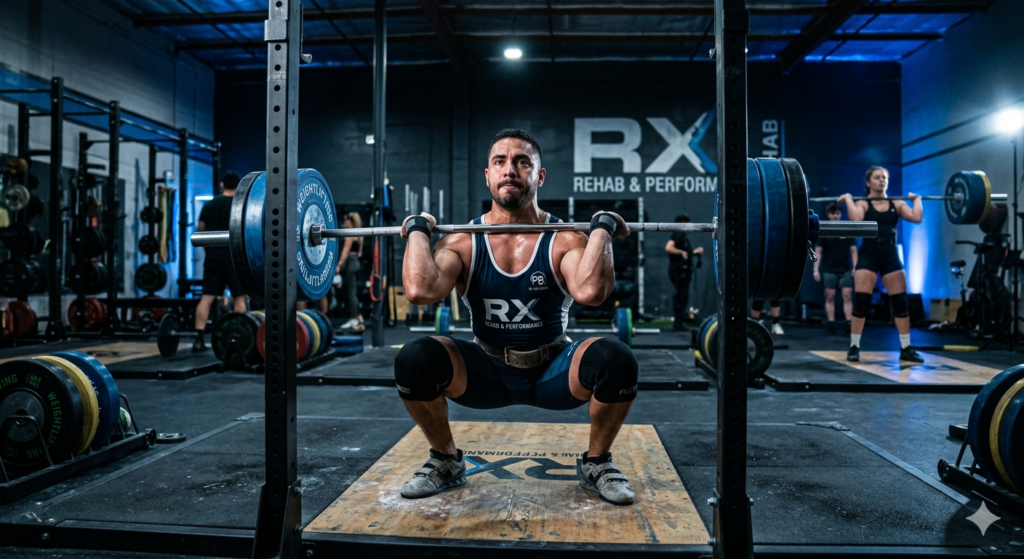
You step into the rack, set your feet, and start to lower into a deep squat. But halfway down, you feel it—a sharp “pinch” in the front of your hip. You try to stretch it out, but the feeling keeps coming back every time you add weight to the bar.
What’s Happening?
That pinching sensation is often called hip impingement. It happens when the top of your thigh bone and the edge of your hip socket don’t move together smoothly. Instead of a fluid glide, the tissues in the front of the joint can feel “crowded” as you get lower to the ground.
Why It Happens
Many people assume they just have “tight” muscles and need more stretching. However, the body often creates tension because it needs more control or stability. When stability is missing, the body tightens muscles to protect the joint.
Common reasons for this pinch include:
- Lack of Stability: If the muscles around the joint aren’t supporting it correctly, the body may tighten other muscles to protect the area.
- Load Tolerance: Sometimes the spine or hips are simply reacting to a load that exceeded what they are currently ready to handle.
- Movement Habits: The body is designed to move, not stay in one position all day. Even perfect form can become uncomfortable if held too long or repeated without variety.
Helpful Movements to Try
These strategies and exercises are designed to help the body regain confidence and may help improve movement and comfort:
- The Goblet Squat: Hold a weight (like a kettlebell) in front of your chest. This acts as a “counterbalance,” helping you sit back into your hips with more core control.
- Hip CARs (Controlled Rotations): Stand tall and slowly move your hip through a full, smooth circle. This helps “explore” the joint space without heavy weight.
- Isometric Hip Flexion: While standing, lift one knee toward your chest and push down on your thigh with your hand while your leg resists. This builds the “active control” the body is looking for.
How RX Rehab & Performance Approaches This Problem
At our clinic in Pacific Beach, we don’t just look at the spot that hurts. We look at how your whole body moves.
Our team at RX Rehab & Performance uses:
- Movement Analysis: We watch you squat to see exactly where the “pinch” starts.
- Manual Therapy: This approach can help support recovery and reduce the feeling of tightness.
- Strength Programming: We build a plan to help your muscles work together so your hip joint feels supported.
Long-Term Prevention Tips
To keep your hips feeling good while training in San Diego, remember these simple tips:
- Vary Your Stance: Try widening your feet or pointing your toes out slightly to create more “room” in the joint.
- Listen to the Pinch: Work in a range of motion that feels comfortable while you build up your strength.
- Warm Up with Purpose: Use exercises that “wake up” your glutes and core before you get under the barbell.
Conclusion
A pinch in the hip can feel alarming, but it doesn’t mean you have to stop lifting. By focusing on stability and gradual movement, many athletes in La Jolla, Little Italy, Bay Park and Pacific Beach return to training safely.
FAQ Section
1. Should I keep squatting if my hip pinches? It is usually best to find a depth or a weight that does not cause the pinch. This approach may help reduce symptoms while you work on your control.
2. Does a hip pinch mean I need surgery? Not necessarily. Many people notice improvement with the right strengthening exercises and movement changes.
3. Will stretching my hip flexors fix the pinch? Stretching might feel good for a moment, but if the pinch is caused by a lack of stability, adding more “stretch” may not be the long-term answer.
4. Can RX Rehab & Performance help with lifting injuries? Yes! We work with lifters and athletes across San Diego, including Clairemont and Bay Ho, to help them stay active and pain-free.
