

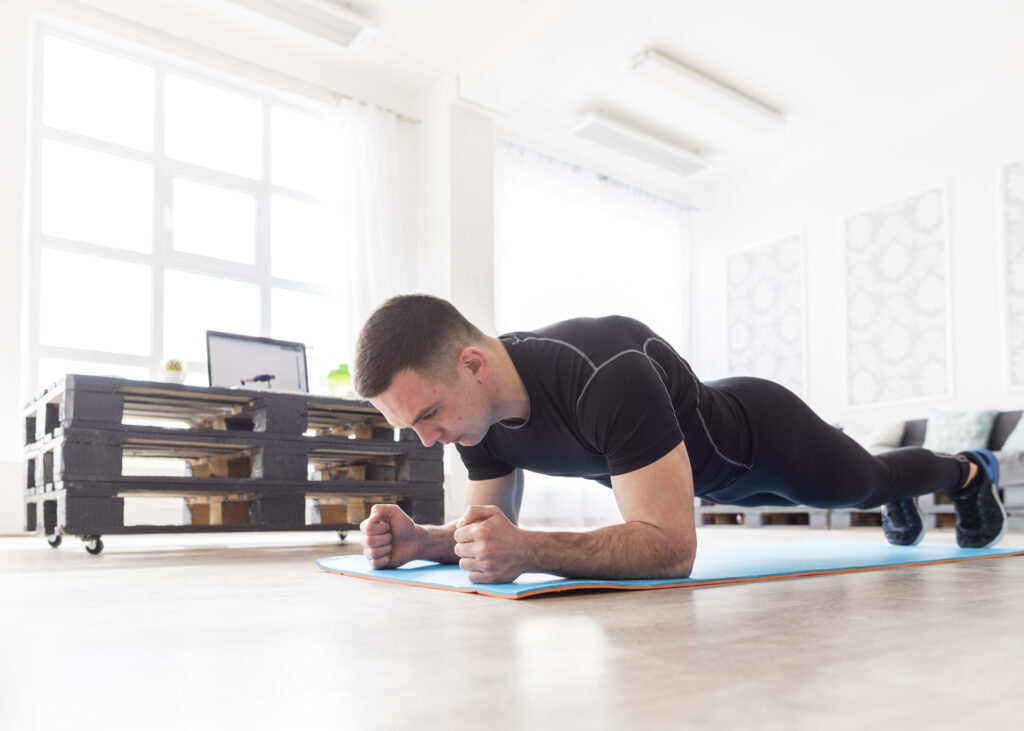
If you’ve ever had back pain, you’ve probably been told to “strengthen your core.” But what does that actually mean?
Does it mean more sit-ups? Planks? Or something else entirely?
At RX Rehab & Performance in Pacific Beach, we teach patients and athletes that core strength and core stability are not the same thing — and understanding the difference can make a big impact on how your back feels and performs.
1. Core Strength vs Core Stability — The Simple Difference
Core strength is about how much force your midsection can produce.
Core stability is about how well your core can control movement — especially under load.
You can have strong abs and still lack stability if your deeper muscles aren’t working together to protect your spine during movement.
That’s why traditional ab workouts don’t always prevent back pain — they build strength in one area, but not control through the whole system.
2. Why Stability Matters More for Your Back
Your core acts like your body’s natural weight belt. When it’s coordinated, it keeps pressure evenly distributed through the spine and hips.
But when deep stabilizers like the transverse abdominis or multifidus lag behind, your spine takes more of the load. Over time, that can lead to stiffness, fatigue, or pain — especially during heavy lifting or long periods of sitting.
Training stability helps your body handle pressure before pain shows up.
3. The Most Common Mistake: Only Training the “Show Muscles”
Crunches and sit-ups build strength in the outer abs, but they don’t teach your core to resist unwanted movement.
Real-world stability comes from training the muscles that brace, coordinate, and react to load — not just flex forward.
That’s why lifters who can deadlift hundreds of pounds sometimes still tweak their backs — strength without control eventually finds its limit.
4. How to Train Both Strength and Stability
You don’t have to pick one over the other — the best programs include both.
Start with Control (Stability)
These exercises teach your deep core to engage and hold position:
- Dead Bug: Builds coordinated control while resisting spinal movement.
- Bird Dog: Trains full-body balance and spinal stability.
- Side Plank: Strengthens lateral stability and obliques.
Then Add Load (Strength)
Once stability improves, add exercises that challenge your core to handle force safely:
- Farmer’s Carries or Suitcase Carries — train total-body bracing.
- Pallof Press: Teaches anti-rotation control under tension.
- Tempo Squats or Deadlifts: Reinforce control under real load.
None of these “fix” back pain on their own — but they build the foundation your spine needs to stay resilient.
5. What Not to Do
- Rely only on crunches or machines for core work.
- Skip core training because your lifts already “use your core.”
- Push through pain — discomfort is feedback, not weakness.
Smart training focuses on how your core works with your hips, glutes, and back, not in isolation.
6. How We Approach Core Stability at RX Rehab & Performance
We start by assessing how your body manages load — not just how strong it is.
Our team in Pacific Beach uses a mix of:
- Movement assessment to find control gaps or compensations.
- Manual therapy if stiffness or tension limits proper bracing.
- Core and hip coordination drills that match your activity level.
- Progressive loading plans to restore full strength safely.
For many of our patients in La Jolla, Bird Rock, and Clairemont, this blend helps them move with more confidence and less fear of “tweaking” their back again.
7. Long-Term Takeaways
- Stability builds the foundation for strength.
- Small daily habits — posture, breathing, bracing — matter more than crunch counts.
- You don’t need extreme exercises; you need consistent, controlled ones.
- Core work should make you feel more stable, not just sore.
Building real stability takes time, but it pays off every time you lift, run, or even just get out of bed pain-free.
FAQ
Q1: What’s the difference between core strength and stability?
Strength is how much you can contract; stability is how well you can control movement under load.
Q2: Does core training prevent back pain?
It can help reduce risk and improve control, but long-term results come from full-body coordination.
Q3: What are the best core exercises for back protection?
Bird dogs, dead bugs, side planks, and carries are great places to start.
Q4: How often should I train my core?
2–3 times per week is ideal, focusing on quality and control, not just fatigue.
Q5: Can physical therapy help with weak core control?
Yes. Movement-based therapy can retrain coordination and teach proper bracing strategies.
Conclusion
Strong abs don’t automatically mean a stable core — and stability is what really protects your back.
By combining strength and control, you give your spine the support it needs to move and perform without pain.
At RX Rehab & Performance, we help active adults around Pacific Beach and La Jolla train smarter, move stronger, and build long-term resilience through balanced core training.
