

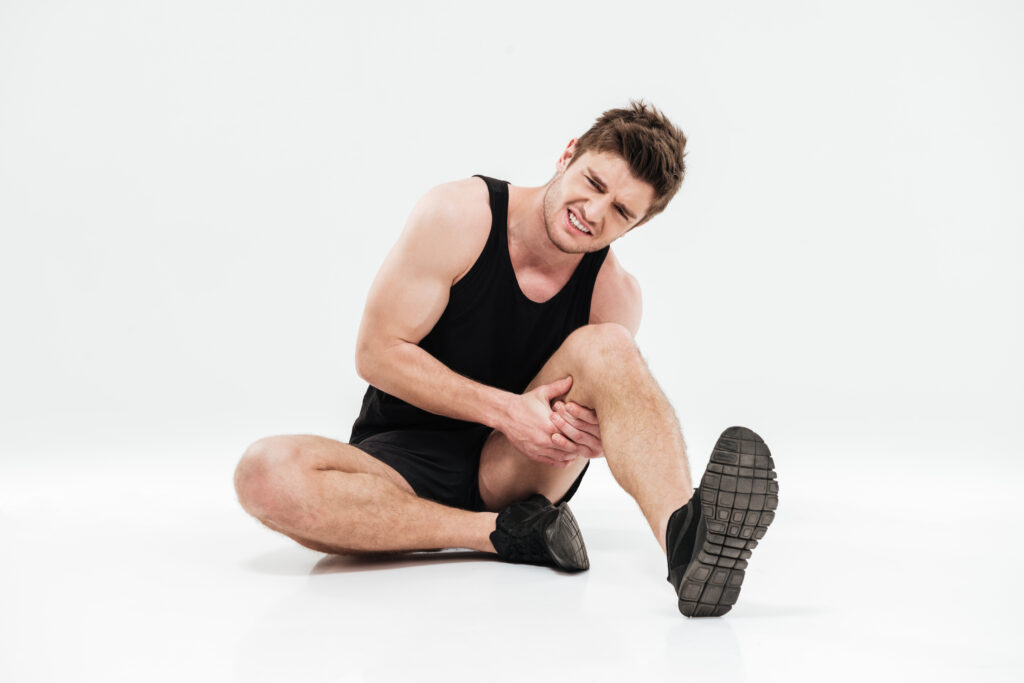
You sprint, feel a sharp grab in the back of your thigh, and instantly know what happened — again.
Hamstring strains are one of those injuries that seem to heal, only to flare up weeks later.
At RX Rehab & Performance in Pacific Beach, we help runners, lifters, and field athletes break that cycle. The key isn’t just healing the strain — it’s understanding why it happened in the first place and how to build true resilience moving forward.
1. What Actually Happens in a Hamstring Strain
Your hamstrings work to slow down and control the leg as it swings forward — especially during sprinting or explosive movement.
A “pull” happens when the muscle fibers are forced to lengthen faster than they can contract, creating small tears.
These tears heal with rest, but if strength and control aren’t restored, the tissue stays vulnerable when you return to full speed.
That’s why many people feel fine walking or jogging, but re-injure themselves the moment they sprint again.
2. Why Hamstring Injuries Keep Coming Back
Recurrent hamstring strains usually point to deeper movement or strength imbalances — not bad luck.
Common underlying factors include:
- Weakness in end-range positions (especially when the hamstring is long).
- Poor glute activation, which makes the hamstrings take over too much work.
- Tightness or stiffness in the hip or pelvis, limiting motion.
- Fatigue or poor load management — ramping up intensity too quickly.
Without addressing these, the tissue may heal, but the problem stays.
3. The Limitations of “Just Stretching It”
It’s tempting to stretch after a hamstring strain, especially when it feels tight.
But aggressive stretching too soon can slow recovery or even re-tear healing fibers.
Early on, gentle mobility and light activation are better choices.
Stretching has its place later — once the muscle is strong enough to handle load through its full range.
4. Strength and Control: The Missing Links
The most effective way to reduce future hamstring issues is by building controlled strength — especially when the muscle is lengthened and loaded.
Here are some evidence-supported exercises that can help when guided appropriately:
Isometric Hamstring Bridge (Early Stage)
Hold your hips up with heels on the floor or ball. Builds low-load tolerance and stability.
Nordic Hamstring Curl (Later Stage)
Gradually lowers under control to strengthen through length — proven to reduce re-injury risk.
Single-Leg Romanian Deadlift
Improves control, balance, and coordination between hamstrings and glutes.
Sprinter Bridge or Kickback Variations
Mimic sport positions and build strength under realistic movement demands.
The goal isn’t just muscle strength — it’s coordination between your hips, core, and hamstrings working as a unit.
5. Smart Return-to-Sport Progression
When pain is gone, the real work begins — restoring speed, control, and confidence.
Start by layering in:
- Light tempo runs or controlled sprints.
- Gradual increases in stride length and power.
- Plyometric progressions (bounds, skips, hops).
Pacing matters: rushing back to 100% speed too soon is the biggest reason hamstring strains come back.
6. How We Help at RX Rehab & Performance
Our clinicians in Pacific Beach take a full-body approach to hamstring rehab — because the hamstring rarely acts alone.
We focus on:
- Manual therapy to ease protective tightness and restore range.
- Movement analysis to identify loading or stride issues.
- Progressive strength programs that rebuild control through the full range.
- Education on warm-up, recovery, and pacing to prevent setbacks.
Athletes from La Jolla to Bird Rock often notice improved performance and confidence once they address these movement links — not just the muscle itself.
7. Keeping Hamstring Strains Away Long-Term
- Include hamstring strength work in both short and long muscle lengths.
- Train glutes and core regularly — they’re the hamstring’s best teammates.
- Warm up dynamically before explosive work.
- Respect fatigue — many strains happen when form breaks late in a session.
Preventing re-injury isn’t about luck — it’s about consistent, smart preparation.
FAQ
Q1: Why do hamstring strains keep happening?
Usually from weakness, fatigue, or imbalances that weren’t fully addressed after the first injury.
Q2: Should I stretch my hamstring after a strain?
Not right away — gentle movement is safer early on, with stretching added later in recovery.
Q3: How long does it take to recover from a hamstring strain?
Mild strains may improve in 2–4 weeks; more severe ones can take longer, depending on rehab consistency.
Q4: What’s the best way to prevent hamstring injuries?
Regular strength work through long ranges (like Nordic curls) and balanced hip/glute training.
Q5: Can physical therapy or chiropractic care help?
Yes. A guided program helps restore mobility, strength, and coordination while reducing re-injury risk.
Conclusion
Hamstring strains are frustrating, but they’re also preventable.
By rebuilding strength, control, and proper load tolerance, you can reduce flare-ups and move with confidence again.
At RX Rehab & Performance, we help athletes and active adults across Pacific Beach and La Jolla stay strong, fast, and resilient — so one pull doesn’t become a recurring story.
