

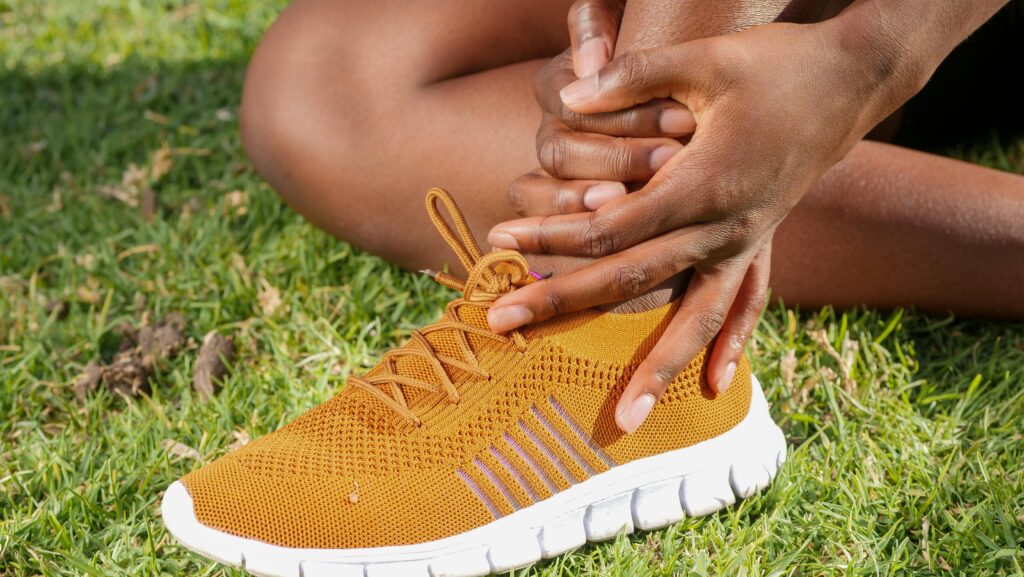
You start your morning run or step into a workout, and the back of your heel feels tight or sore. It loosens up after a few minutes, so you push through — but by the next day, it’s back again.
That cycle is the hallmark of Achilles tendinopathy, one of the most common overuse injuries we see at RX Rehab & Performance in Pacific Beach.
The good news? Achilles pain responds extremely well to the right kind of loading — not rest, not endless stretching, but progressive strength that teaches the tendon to tolerate stress again.
1. What’s Really Happening
Your Achilles tendon connects the calf muscles (gastroc + soleus) to your heel bone. It’s built to store and release energy like a spring.
When you train hard, increase mileage, or return after a break, that spring can get overloaded before it has time to adapt. The result: small microscopic changes inside the tendon that make it sensitive and stiff.
This is tendinopathy — not a “tear” and not inflammation in the classic sense. The tissue isn’t broken; it’s irritated and needs a smart rebuild.
2. Why It Happens
Most Achilles pain comes from training or lifestyle habits that don’t let the tendon recover between loads.
Common patterns we see around La Jolla, Bird Rock, and Clairemont include:
- Sudden increases in running or jumping volume
- Switching to new shoes or surfaces too quickly
- Weak calf and glute muscles
- Limited ankle mobility from prior injuries
These issues cause the tendon to absorb more force than it can handle. Fixing them means teaching the body to share the load better.
3. The Mistake: Resting Too Much
When pain hits, rest feels logical — but too much rest actually makes tendons weaker and more reactive once you start moving again.
The key is relative rest: reduce the load temporarily, then reintroduce strength work at tolerable levels.
Pain during rehab isn’t dangerous — it’s feedback. Mild discomfort (2-3/10) during exercises is normal and safe.
4. Step-by-Step Loading Progression
Healing a tendon is like retraining a spring: first calm it down, then rebuild its strength and elasticity.
Phase 1: Isometrics (Calm It Down)
Early on, use static holds to reduce sensitivity and maintain strength.
- Wall Calf Raise Hold: Push into the balls of your feet and hold halfway up for 30 seconds.
Repeat 3–4 times, 2 × per day.
These exercises reduce pain and re-activate the tendon without heavy motion.
Phase 2: Slow Eccentrics (Build Strength)
Once daily pain starts to drop, introduce slow calf raises on a step:
- Rise up with both feet, lower slowly on the sore leg (3–4 seconds down).
This rebuilds tissue strength and alignment.
Phase 3: Heavy–Slow Resistance (Rebuild Capacity)
Add weighted raises with dumbbells or a barbell.
- 3 sets × 8 reps, 3 × per week, focusing on control.
Strength, not stretching, drives recovery here.
Phase 4: Plyometrics (Return to Sport)
Once pain is minimal, reintroduce jumping, hopping, or sprint drills gradually.
This restores the tendon’s “spring” function for sport and life.
5. What to Avoid
- Aggressive stretching of the calf — it compresses the irritated tendon.
- Quick return to hill sprints or box jumps.
- Fluctuating between total rest and overtraining.
Consistency matters more than intensity.
6. How We Treat Achilles Pain at RX Rehab & Performance
Every case starts with a movement assessment to find the real stress point — sometimes it’s the ankle, sometimes the hip.
Our treatments combine:
- Manual therapy to improve tissue mobility.
- Progressive loading programs tailored to your goals.
- Gait and movement analysis to correct mechanics.
- Education on pacing, footwear, and recovery.
Patients from Pacific Beach to Bay Ho often start noticing progress within two weeks once we apply the right load progression.
7. Staying Pain-Free Long Term
Once symptoms settle, the goal is resilience:
- Keep calf and glute strength work in your routine.
- Progress mileage or jumping volume slowly (10 % rule).
- Warm up with light calf raises before training.
- Listen to early stiffness — it’s your tendon’s way of asking for rest, not punishment.
FAQ
Q1: Should I rest completely for Achilles pain?
A1: No. Gentle, guided loading helps the tendon heal stronger.
Q2: What’s the best exercise for Achilles tendinopathy?
A2: Slow calf raises and heavy–slow resistance training are most effective.
Q3: How long does Achilles pain take to heal?
A3: Most cases improve in 6–12 weeks with consistent loading and control.
Q4: Can physical therapy help?
A4: Yes. Manual therapy plus progressive strength work gives faster, longer-lasting relief.
Q5: Why does my Achilles hurt most in the morning?
A5: Tendons stiffen overnight; gentle movement in the morning helps reduce that pain.
Conclusion
Achilles tendinopathy doesn’t have to keep you sidelined. The fix isn’t fancy — it’s consistent, smart loading that teaches your body to handle stress again.
At RX Rehab & Performance, we help runners, lifters, and weekend athletes from across Pacific Beach and La Jolla rebuild strong, pain-free movement so they can stay active for good.
