

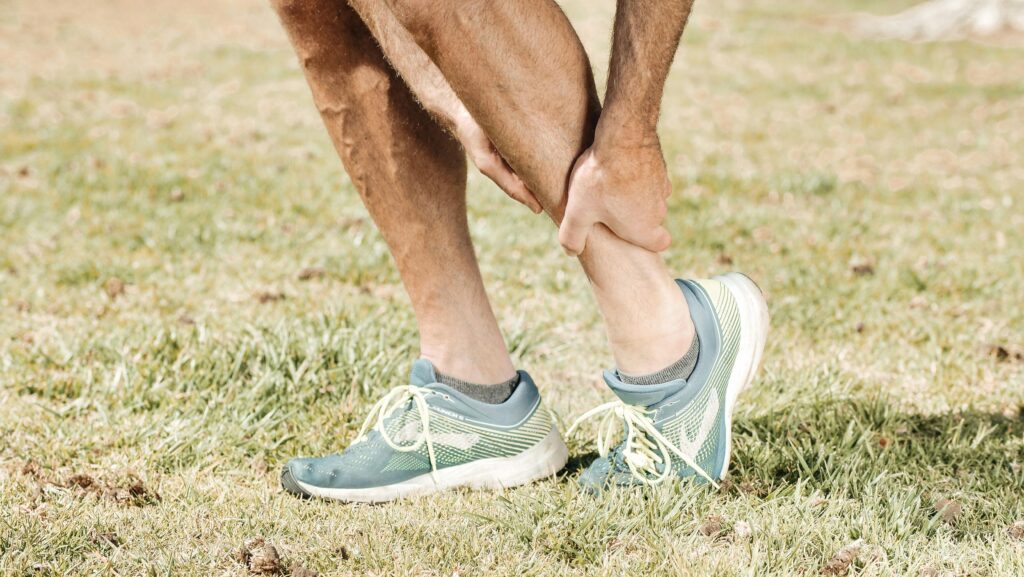
You step off a curb or land from a jump and feel that sudden twist in your ankle. It hurts, swells, gets better… and then weeks or months later, it happens again.
If that sounds familiar, you’re not alone. At RX Rehab & Performance in Pacific Beach, we see many athletes and active adults who’ve dealt with repeat ankle sprains.
The good news? Chronic ankle sprains aren’t just bad luck — they’re usually a sign your body hasn’t fully rebuilt control after the first injury.
1. What Actually Happens During an Ankle Sprain
An ankle sprain stretches or tears the ligaments that stabilize the joint — usually on the outer side.
While the initial pain and swelling often go away in a few weeks, the deeper stabilizing muscles and sensory feedback around the joint can take longer to recover.
That’s why even after the pain fades, the ankle may still feel “loose” or unstable when you move quickly or on uneven ground.
2. Why Ankle Sprains Keep Coming Back
Repeat ankle sprains aren’t usually about weak ligaments — they’re about lost proprioception, or the body’s ability to sense and react to position changes.
After a sprain, the brain becomes less efficient at recognizing where the foot is in space. That delay in reaction time makes another roll more likely.
Other common contributors include:
- Weak peroneal muscles (outside of the lower leg).
- Poor balance or single-leg control.
- Incomplete rehab after the first injury.
- Returning to sport too quickly.
If those deeper stabilizers aren’t retrained, even a small misstep can cause another sprain.
3. Why Rest Alone Isn’t Enough
It’s easy to assume that once the swelling is gone, you’re good to go — but rest doesn’t rebuild coordination.
Without movement retraining, the brain doesn’t relearn how to stabilize the ankle during quick shifts, jumps, or cuts.
That’s why the first few weeks after a sprain are crucial for regaining both strength and sensory control.
4. Building Real Ankle Stability
Long-term ankle stability comes from a mix of strength, balance, and movement retraining — not just rest or bracing.
Here are a few foundational exercises that help support recovery and resilience (when guided appropriately):
1. Isometric Eversion (Early Stage):
Press the outside of your foot gently into a wall or band. Builds activation without strain.
2. Single-Leg Balance Work:
Stand on one foot on flat ground, then progress to unstable surfaces or eyes-closed balance.
3. Calf Raises (Both Sides):
Strengthens calf and foot muscles that stabilize the ankle.
4. Lateral Band Walks:
Engages hip and ankle stabilizers together for better control.
5. Hop-to-Balance Drills (Later Stage):
Mimic sport demands by combining power with stability.
These exercises don’t “fix” instability instantly — they help rebuild the awareness and control your ankle needs to protect itself again.
5. When to Be Cautious
If you experience:
- Ongoing swelling or bruising beyond a few weeks.
- Sharp pain when bearing weight.
- Frequent re-sprains despite exercise.
Then a movement assessment can help identify whether there’s hidden stiffness or weakness higher up the chain — like at the hip or knee — contributing to the issue.
6. How We Help at RX Rehab & Performance
Our approach focuses on full-body control, not just ankle strength.
We start with a detailed movement analysis to see how your foot, knee, and hip interact during motion.
From there, we use:
- Manual therapy to restore joint glide and tissue mobility.
- Balance and proprioception drills to rebuild coordination.
- Strength progressions for both local (ankle) and global (hip/core) stability.
- Education on return-to-sport pacing and footwear support.
Patients from Pacific Beach, La Jolla, and Clairemont often find that once their stability returns, their overall movement feels more confident and powerful — not just their ankle.
7. Long-Term Prevention Tips
- Keep single-leg balance work in your routine year-round.
- Train barefoot or in minimal shoes occasionally to sharpen proprioception.
- Strengthen hips and glutes — ankle control starts higher up the chain.
- Replace worn-out shoes that reduce support and responsiveness.
- Warm up with mobility and stability drills before running or jumping.
Consistency beats intensity — small doses of stability training go a long way.
FAQ
Q1: Why do ankle sprains keep happening?
Usually from reduced balance and control after the first injury, not just weak ligaments.
Q2: How long does it take to recover from an ankle sprain?
Mild sprains may improve in 2–4 weeks, but full stability training can take longer.
Q3: Should I wear an ankle brace after a sprain?
Short-term support can help early on, but long-term strength and balance work are more effective.
Q4: Can I still exercise with a mild ankle sprain?
Yes, with modified, pain-free movements under professional guidance.
Q5: How can physical therapy or chiropractic care help?
They help restore mobility, coordination, and confidence through hands-on care and guided progression.
Conclusion
Ankle sprains don’t have to become a lifelong pattern.
When you retrain stability and balance — not just strength — your body learns to protect itself again, naturally and efficiently.
At RX Rehab & Performance, we help active adults across Pacific Beach and La Jolla move confidently and reduce the risk of repeat injuries through personalized, movement-based care.
